A spectral-modeled virtual instrument reviving a 1959 electro-acoustic piano patent, producing a warm, clean, bright tone with metallic highs. It is designed for creative processing, offering raw, malleable sounds.
Instrument Purpose
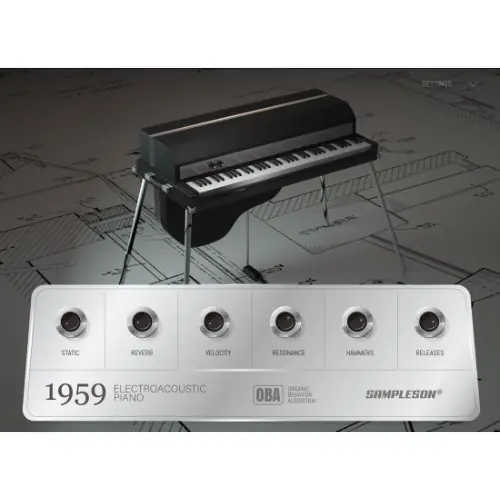
1959 by Sampleson is a virtual instrument that recreates an electro-acoustic piano concept from a 1959 patent. Since the patent was never physically built, the sound is an imaginative interpretation using spectral modeling, not sample playback. It provides an 88-note piano with a warm, clean character and bright metallic touches at higher velocities.
The instrument offers adjustable controls for resonance, hammer noise, release sound, and static noise emulation. This lets you shape the tone from silky lows to glassy highs, reflecting the patent’s focus on string vibration direction for better pickup. It is a versatile sound source aiming for expressiveness across dynamic playing.
Key Capabilities
Built on spectral modeling, 1959 avoids traditional sampling, ensuring a fluid response across the keyboard. The interface is scalable HD for readability. It includes a built-in reverb, but the core design is raw, intended for external effects. The instrument runs as VST or AU, with standalone operation on both Windows and Mac.
No online activation is required after installation, simplifying setup. The controls for resonance, hammer, release, and static noise act as sound-shaping tools, allowing you to tailor the piano’s personality. This combination of modeling and tweakable parameters makes it a fresh take on electro-acoustic pianos, offering a unique alternative to sample-based libraries.
Workflow and Integration
In a DAW, 1959 can be inserted as a VST or AU plugin, or used standalone. The raw output encourages routing through your favorite processors like choruses, flangers, or phasers to craft your signature sound. The built-in reverb provides a starting point, but you can bypass it to maintain a dry signal for deeper processing.
To get the best results, start with the resonance and hammer controls to set the piano’s baseline character, then add effects in your mix. The static noise emulator can add vintage texture or be dialed out for clean tones. This workflow suits producers who enjoy sculpting sounds rather than relying on presets.
Practical Applications
1959 is ideal for genres needing expressive piano with a vintage electro-acoustic flair. Use it in pop, ambient, or experimental tracks where its bright, metallic highs can cut through mixes. Its warmth supports slower ballads, while the raw timbre shines in processing chains for creative sound design.
For film scoring, it can provide unique textures for emotional cues. Because it’s spectral-modeled, you can perform with natural dynamics, making it suitable for solo performances or layered arrangements. Whether you need a clean, resonant piano or a heavily effected sound, its adjustability serves both conventional and experimental production needs.
Key features
- 88-note spectral-modeled electro-acoustic piano
- Adjustable resonance, hammer noise, release, and static noise
- Scalable HD interface
- VST/AU plugin and standalone operation
- No online activation required
Best for
Producers and composers seeking a unique electro-acoustic piano with a raw, malleable character for creative effects, especially in pop, ambient, or experimental music. It excels in processing-heavy workflows where you want to shape the tone.