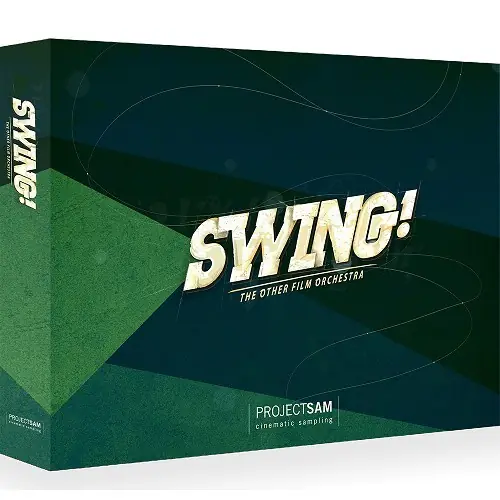
Swing! is a big band and jazz sample library for film scoring, featuring ensembles, rhythm sections, and solo instruments, recorded in two locations and integrated with Komplete Kontrol.
Purpose and Concept
Swing! brings together the energy of jazz big bands with the needs of film scoring. It is designed to add a lively, groovy character to compositions for film, animation, games, and advertisements. The library offers a diverse collection of sounds that blend jazz instrumentation with cinematic textures, aiming to lighten the creative process for composers.
The library was recorded in two different locations: a concert hall used for the Symphobia series, captured with three microphone sets, and a smaller studio environment with two microphone sets. The choice of location depended on the instrument and musical context, providing varied acoustic characters that suit different ensemble and solo setups.
Key Capabilities
The library includes a wide range of instruments: lead instruments such as trumpets, guitars, accordion, harmonica, toy piano, and whistle; ensemble patches like Big Band Tutti, Sax Section, and Brass Section; a rhythm section with guitars, basses, and jazz drums; and unique elements like lap steel and low ensembles. These are organized into categories for easy navigation and include articulations like legato, chords, gestures, and bonus material.
A notable feature is the set of tempo-synced grooves and fills for drums and guitars, available in multiple tempo sets, which can be used to add rhythmic drive. The library also offers inspiring Multis that combine instruments into ready-to-use setups. The 1.2 update introduced microphone output routing for flexible mixing and a refreshed design, plus Native Kontrol Standard support for integration with NI hardware and software.
Workflow and Integration
Swing! works with the free Kontakt Player, making it accessible without a full Kontakt license. The Native Kontrol Standard support in version 1.2 means full integration with Komplete Kontrol and Maschine, including Light Guide and KK control, allowing for hands-on parameter manipulation and seamless browsing within those environments.
The microphone output routing feature in the update lets users route individual microphone channels to separate outputs, enabling custom mixing and placement in a DAW or mixing console. The library’s design, refreshed in 1.2, aims to streamline navigation, and the easy output routing simplifies setting up multi-channel sessions. This makes it suitable for contexts where precise acoustic control is needed.
Practical Applications
Swing! is ideal for scoring scenes that require a jazz or big band flavor, such as period dramas, comedies, or action sequences with a swing aesthetic. The ensemble patches are useful for quick mockups or final scores, while the solo legato instruments allow for expressive melodies that can be featured prominently. The rhythm section grooves can provide a foundation for tracks.
The diverse microphones and output routing allow composers to tailor the sound to fit the mix, from intimate studio settings to concert hall ambience. The included Multis offer immediate inspiration, and the tempo-synced fills help in creating dynamic transitions. The library’s versatility makes it a practical tool for advertising music, animated features, and game soundtracks requiring a sophisticated jazz palette.
Key features
- Big band ensembles with tutti, unison, octaves, chords, gestures, and bonus material
- Sax and brass sections including mutes, solos, and ensemble articulations
- Rhythm section with guitars, basses, and jazz drums, plus finger snaps
- Lead legato instruments for trumpet, guitar, accordion, harmonica, and more
- Tempo-synced jazz drum and guitar grooves across multiple tempo sets
- Microphone output routing with multiple mic sets for flexible mixing
- Native Kontrol Standard support for Komplete Kontrol and Maschine integration
Best for
Swing! is best for composers needing authentic big band and jazz elements in film, game, and advertisement scores. It excels at adding lively ensemble swells, grooves, and expressive solos to scenes requiring a vintage or jazzy atmosphere, and its flexible mic routing suits both detailed mixing and quick mockups.