A professional EQ bundle with two complementary equalizers for mixing and mastering, offering linear-phase precision and parallel-band subtlety.
Purpose and Core Design
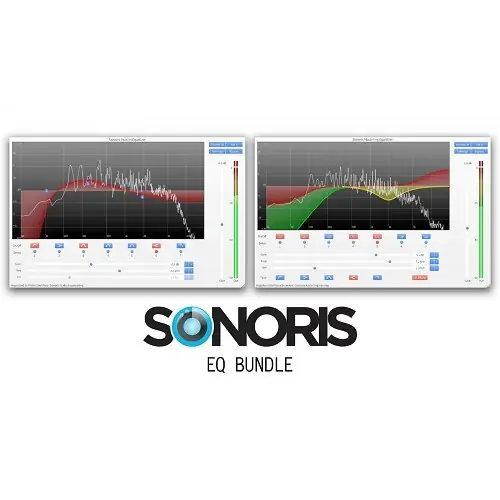
This bundle provides two distinct equalizers tailored for critical audio work. The Mastering Equalizer (SMEQ) focuses on transparent correction and enhancement, while the Parallel Equalizer (SPEQ) offers a more interactive, analog-style response. Both are available in VST, VST3, AU, AAX, and RTAS formats for Windows and Mac.
SMEQ features seven bands with selectable linear or minimum phase operation per band, including lowpass, highpass, peaking, and shelving filters. Its linear-phase mode avoids transient smearing and preserves imaging. SPEQ uses parallel-connected bands with feedback/feedforward topology, producing a subtler effect that requires careful adjustment.
Key Capabilities of the Mastering Equalizer
SMEQ excels at precise frequency correction without adding coloration. It handles demanding material like vocal soloists, orchestral recordings, or complex mixes, allowing boosts or cuts that would typically cause muddiness or phase issues with conventional EQs. The linear-phase implementation ensures only the intended frequency changes, leaving depth and spatial information intact.
Additional features include stereo, L/R, or mid-side processing, up to 48 dB/octave filters, and selectable upsampling (2x, 4x, 8x, or auto) for accurate response up to Nyquist. A spectrum analyzer, A/B comparison, and dragable handles on a large display facilitate precise adjustments. Soft Engage technology prevents switching noise.
Character of the Parallel Equalizer
SPEQ is a minimum-phase equalizer with seven bands, where bands 2–6 operate in parallel on the same input signal. This design means gains do not simply add up; for example, a low-shelf boost combined with a low-frequency bell boost yields less cumulative effect than in a series EQ. This encourages subtlety and prevents over-processing.
The filters are constant-Q bells and shelves, with low/high cuts in series. The parallel topology results in a cleaner signal path and a more natural response, requiring more effort to dial in but rewarding with transparent results. It supports stereo, L/R, and MS processing, plus the same analyzer, A/B, and UI conveniences as SMEQ.
Workflow and Practical Applications
In mastering, SMEQ is ideal for surgical fixes on bus material, such as taming harsh frequencies or adding air without changing the mix’s depth. For mixing, its linear-phase mode helps on individual tracks where transparency is crucial. SPEQ suits gentle musical shaping, like broad tonal adjustments on a full mix or group buses, where its interactive bands encourage restrained, natural EQ moves.
Both plugins integrate smoothly into professional sessions, with full automation, saved settings, and 64-bit internal resolution. The scalable interface and mousewheel support speed up editing. License activation is available online or via USB for offline computers, ensuring flexible deployment.
Key features
- Two EQs: linear-phase SMEQ and parallel SPEQ
- 7-band parametric with selectable filters per band
- Stereo, L/R, or mid-side processing on both
- Upsampling options on SMEQ for accurate high-frequency response
- A/B comparison and spectrum analyzer included
- Full automation, saved settings, and scalable UI
Best for
Ideal for mastering engineers needing transparent correction with SMEQ, and for mixing engineers who prefer a subtle, analog-style parallel EQ (SPEQ) for gentle tonal shaping without over-processing. Both serve professional audio work on complex material.