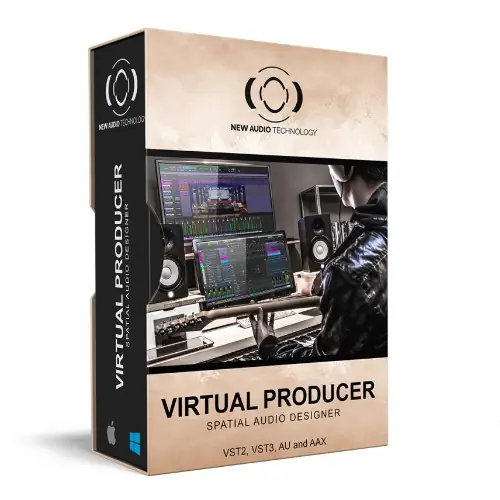
Spatial Audio Designer – Virtual Producer is a plug-in suite for creating and monitoring immersive audio, supporting formats like Dolby Atmos, MPEG-H, and binaural output, with advanced virtual buses and unlimited input objects.
Purpose and Core Function
The Spatial Audio Designer (SAD) is designed for mixing and monitoring immersive audio in any DAW or video workstation. It uses a virtual bus system to simulate loudspeaker configurations, letting you switch between formats like 5.1, 7.1, Dolby Atmos 7.1.2 to 9.1.6, AURO-3D, MPEG-H, IMAX 3D, and 22.2 with a mouse click. This makes it a central tool for creating multi-format masters.
The Virtual Producer edition includes two plug-ins, Send and Mix, supporting binaural output and two seats. It serves both monitoring and mixing tasks, with the ability to handle hundreds of input objects per session. Existing panning and volume automation data can be reused, so converting a 5.1 mix to 7.1 or a 3D format is fast, simplifying the upgrade to spatial workflows.
Key Capabilities
The SAD supports object-based processing and offers unlimited inputs from mono, stereo, or 7.1 sources. Outputs scale up to 330 channels, including discrete 5.1, 7.1.4 for MPEG-H and Dolby Atmos, or 64.0 for full-dome environments. All inputs and outputs can be controlled via OSC, and the interface is adjustable, allowing panning grids in box or sphere styles.
For MPEG-H and Sony 360 Reality Audio, the SAD uses Fraunhofer’s technology to author, mix, monitor, export, and encode these formats, including approved workflows. A separate Offline Export Tool renders any format discreetly after the general export. The binaural virtual loudspeaker processing is based on real studio measurements and echo chambers, enabling headphone mixing for any format.
Workflow and Integration
The workflow centers on creating a mix in one environment and playing it back in another without additional effort. For instance, you can mix with headphones using the binaural virtualization and later monitor on a proper loudspeaker setup. The virtual bus system lets you author in one configuration and instantly monitor in another, which is useful for productions targeting multiple delivery formats.
The SAD leverages existing automation to accelerate format conversions, so a 5.1 session can be upmixed to 7.1 or 3D in minutes. Object-based export ensures that any format can be rendered from the same session. The two-seat license in Virtual Producer supports collaborative setups, and the included Send and Mix plug-ins cover both routing and final mixing tasks.
Practical Applications
You can use the SAD for creating binaural mixes for headphones, suitable for music, film, or podcasting. It is also suitable for producing immersive mixes for cinema, home theater, 360/VR, and mobile entertainment. With its support for planetarium or custom configurations, you can export multi-format mixes for installations like dome environments, where standard formats may not apply.
The MPEG-H creation capability is valuable for broadcast and streaming services that adopt the format, including Sony 360 Reality Audio releases. The monitoring features—gain, mute, and solo for each output—are helpful for checking specific elements. The SAD is a tool for those who need to work with multiple immersive formats professionally.
Key features
- Virtual bus system for monitoring any immersive format
- Formats: 5.1, 7.1, Dolby Atmos up to 9.1.6, AURO-3D, MPEG-H, IMAX 3D, 22.2
- Unlimited input objects from mono, stereo, or 7.1 sources
- Up to 330 outputs, including 64.0 for dome environments
- MPEG-H and Sony 360 Reality Audio authoring and encoding
- Binaural virtual loudspeaker processing for headphone mixing
- OSC control for inputs and outputs
Best for
Best for audio engineers and post-production professionals who need to create, monitor, and export immersive mixes in multiple formats, including MPEG-H and Dolby Atmos, with flexibility to switch between speaker configurations or work on headphones. Also suits planetarium and custom installation projects requiring up to 330 outputs.